Early skin colonisation: why environmental conditions matter
The skin microbiome plays a fundamental role in barrier integrity, hydration and immune balance. Yet, while much research has focused on microbial diversity, far less attention has been given to early interspecies interactions and the environmental conditions that shape them.
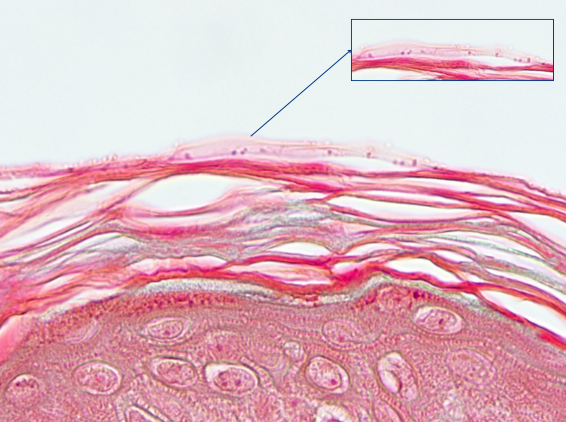
In collaboration with Clarins, Eurofins BIO-EC has published new research investigating the early co-colonisation of Staphylococcus epidermidis and Staphylococcus aureus on reconstructed epidermis and human skin explants.
Rather than focusing on late-stage infection models, this work explored the very first hours of bacterial adhesion and their short-term impact on key barrier markers under different relative humidity conditions.
Although there were lots of detailed findings, three key messages were prevalent:
- Environmental humidity influences microbial behaviour
Under highly humid laboratory conditions, co-inoculation of both bacterial species led to increased early adhesion. This effect was not observed under dry or physiologically relevant humidity levels.
Takeaway: Experimental conditions can significantly influence microbiological outcomes. Physiological relevance is essential when designing microbiome-related studies.
- Early microbial interactions can affect hydration markers
Co-colonisation was associated with measurable modulation of Natural Moisturising Factors (NMFs), central to stratum corneum hydration.
Takeaway: Even short-term microbial interactions may influence biochemical pathways linked to moisturisation, a key consideration when substantiating hydration or barrier-support claims.
- Barrier responses are model-dependent
Responses observed in reconstructed epidermis differed from those seen in native skin explants, particularly for filaggrin expression.
Takeaway: Model selection is strategic. The architecture and environmental exposure of the test system directly affect biological interpretation and claim robustness.
These findings reinforce several strategic principles:
- Integrate physiologically relevant environmental parameters into testing protocols
- Combine complementary skin models to strengthen predictivity
- Consider early microbial events when evaluating barrier and hydration performance
Scientific credibility in microbiome research depends not only on what is measured, but how and under which conditions it is measured.
Read the full scientific publication: Frontiers | Early skin colonization by Staphylococcus epidermidis and Staphylococcus aureus reveals environment-dependent synergistic effects