Eurofins Cosmetics & Personal Care strengthens its expertise in skin imaging with LC-OCT
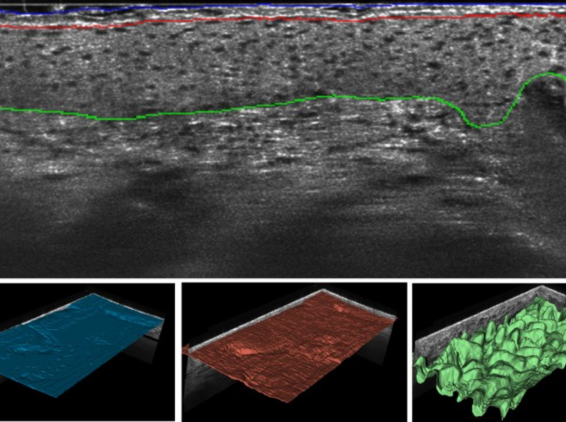
Eurofins Cosmetics and Personal Care has recently integrated Line-field Confocal Optical Coherence Tomography (LC-OCT) into its portfolio, strengthening its in vivo imaging capabilities for cosmetic efficacy assessment. Initially validated in dermatological oncology, LC-OCT is now attracting growing interest in cosmetic science due to its ability to visualise skin microarchitecture non-invasively and with near-histological resolution.
LC-OCT provides high-resolution, real-time imaging of the epidermis and superficial dermis, enabling detailed qualitative and semi-quantitative analyses of structural changes induced by cosmetic products. This is particularly relevant for before/after comparisons and for monitoring dermal remodelling processes following topical application.
From a biological standpoint, the technique is well suited to studying the papillary dermis, where metabolically active fibroblasts and dynamic collagen turnover are predominantly located. In contrast, the deeper reticular dermis contains thicker, more structural collagen fibres with lower reactivity. LC-OCT therefore offers meaningful insight into superficial dermal architecture, where many cosmetic claims are expected to manifest.
As with any imaging modality, LC-OCT has inherent limitations, including a penetration depth of approximately 500 µm, operator-dependent image acquisition and interpretation, and the inability to fully characterise functional or molecular skin parameters on its own. Consequently, its added value is maximised when combined with complementary biophysical, biochemical or clinical evaluation methods.
Overall, the acquisition of LC-OCT represents a significant asset for study design, provided its indications and limitations are fully understood. Looking ahead, LC-OCT will be applicable to ex vivo skin explants, opening new perspectives for translational and mechanistic cosmetic research.