Rapid soil tests for assessing soil health
Improving soil health through faster, more comprehensive testing
Soil testing plays a key role in improving the sustainability of food production and land management. It contributes directly to several United Nations Sustainable Development Goals (SDGs), including food security, water quality, climate action and biodiversity. However, conventional soil tests often focus on only a limited set of parameters, such as nitrogen (N), phosphorus (P) and potassium (K), and therefore provide an incomplete picture of soil health.
To support more sustainable and informed land management, Eurofins Agro has developed the Soil Health Indicator: a rapid, standardised soil health assessment that combines physical, chemical and biological soil properties into one clear and actionable report.
Why conventional soil testing is no longer sufficient
Traditional soil analyses are valuable, but they mainly address nutrient availability. Soil health, however, is influenced by a much broader range of factors, including:
- soil structure and water holding capacity
- organic matter and carbon storage
- biological activity and biodiversity
- the presence of contaminants such as heavy metals
As interest in sustainable agriculture increases among growers, governments and agrifood companies, there is a growing need for soil information that is both more comprehensive and faster available, while remaining easy to interpret.
A rapid and standardised soil health assessment
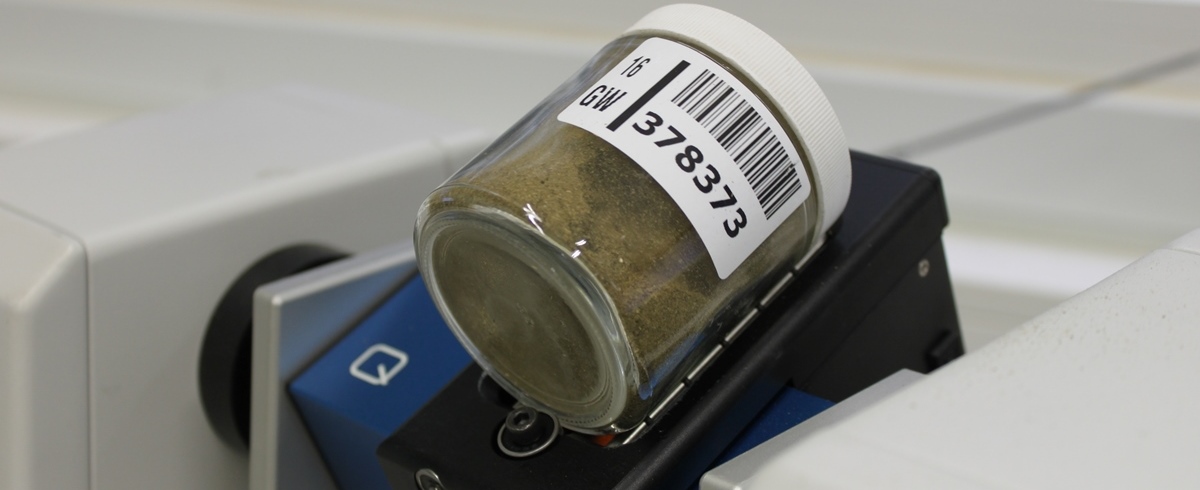
Eurofins Agro developed and tested a soil health assessment that combines near-infrared spectroscopy (NIRS) with 0.01 M CaCl₂ extraction and advanced elemental analysis. This approach makes it possible to assess a wide range of soil characteristics efficiently and cost-effectively.
“With this combination of analytical methods, many soil characteristics can be translated into one clear Soil Health Indicator report,”
Dr Arjan Reijneveld, soil scientist at Eurofins Agro
From soil data to actionable insight
The Soil Health Indicator report goes beyond standard nutrient testing and provides growers and land managers with practical insight into their soil. The report includes:
- physical, chemical and biological soil parameters
- carbon characteristics and carbon storage potential
- essential nutrients and potential contaminants
- reference and target values for interpretation
By linking these results to soil and crop management guidelines, users can make better-informed decisions to improve soil performance and long-term resilience.
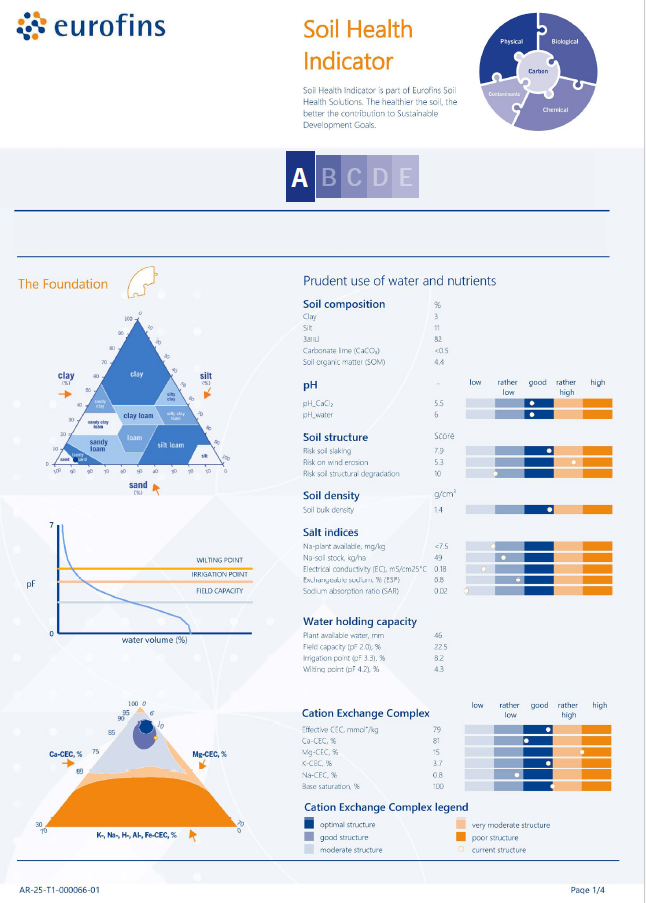
The Soil Health Indicator report is structured into seven clear sections:
- Physical soil properties
- Biological indicators
- Soil carbon
- Essential nutrients
- Contaminants
- Management recommendations
- ABCDE soil health score
This structure allows complex soil data to be translated into a clear overview that supports practical decision-making.
ABCDE score: quick benchmarking of soil health
A key element of the report is the ABCDE score, a benchmarking system that assigns an A–E score to different soil characteristics. This scoring method aligns with the soil health assessment approach proposed by the European Commission and makes it easy to:
- compare soil health over time
- identify strengths and limitations
- monitor improvements resulting from management changes
The ABCDE score provides a quick and accessible entry point into more detailed soil data.
Scientifically validated across countries
The Soil Health Indicator is based on extensive scientific research. In a recent study, more than 50 soil properties relevant to soil health were selected and analysed using an integrated, three-step analytical approach.
This methodology was tested across 15 countries, using over 100,000 soil samples from cropland, grassland, urban and natural areas. The resulting dataset includes reference and target values for more than 50 soil health indicators and supports a harmonised approach to soil monitoring at European level.
From top-down rules to outcome-based soil management
Rather than relying solely on prescriptive regulations, the Soil Health Indicator supports an outcome-based approach to soil management. By identifying key soil health indicators and linking them to clear goals, land managers can take targeted action to improve both productivity and sustainability.
This bottom-up approach creates room for innovation and entrepreneurship, while also enabling agrifood companies, governments and other stakeholders to verify sustainability efforts in a transparent way.
Want to know more?
Learn more about the Soil Health Indicator >
Contact our experts for advice on soil health testing and interpretation >