Soil Health Indicator
Understand, monitor and improve soil health
Soil Health Indicator
Working towards healthy soil in agriculture is like solving a complex jigsaw puzzle, where all the pieces must fit together and be in balance. The Soil Health Indicator helps farmers and land managers gain control of this puzzle by tackling challenges such as nutrient management planning and carbon sequestration.
Healthy soil is the foundation of food quality and food security. It contributes to more resilient crops, cleaner water, sustainable production, greater biodiversity, and helps to store carbon and reduce CO2 emissions. These factors help farmers and land managers run businesses that are more environmentally and financially sustainable.
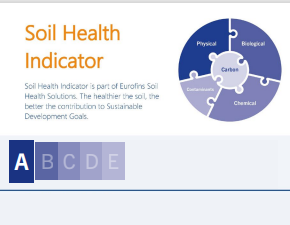
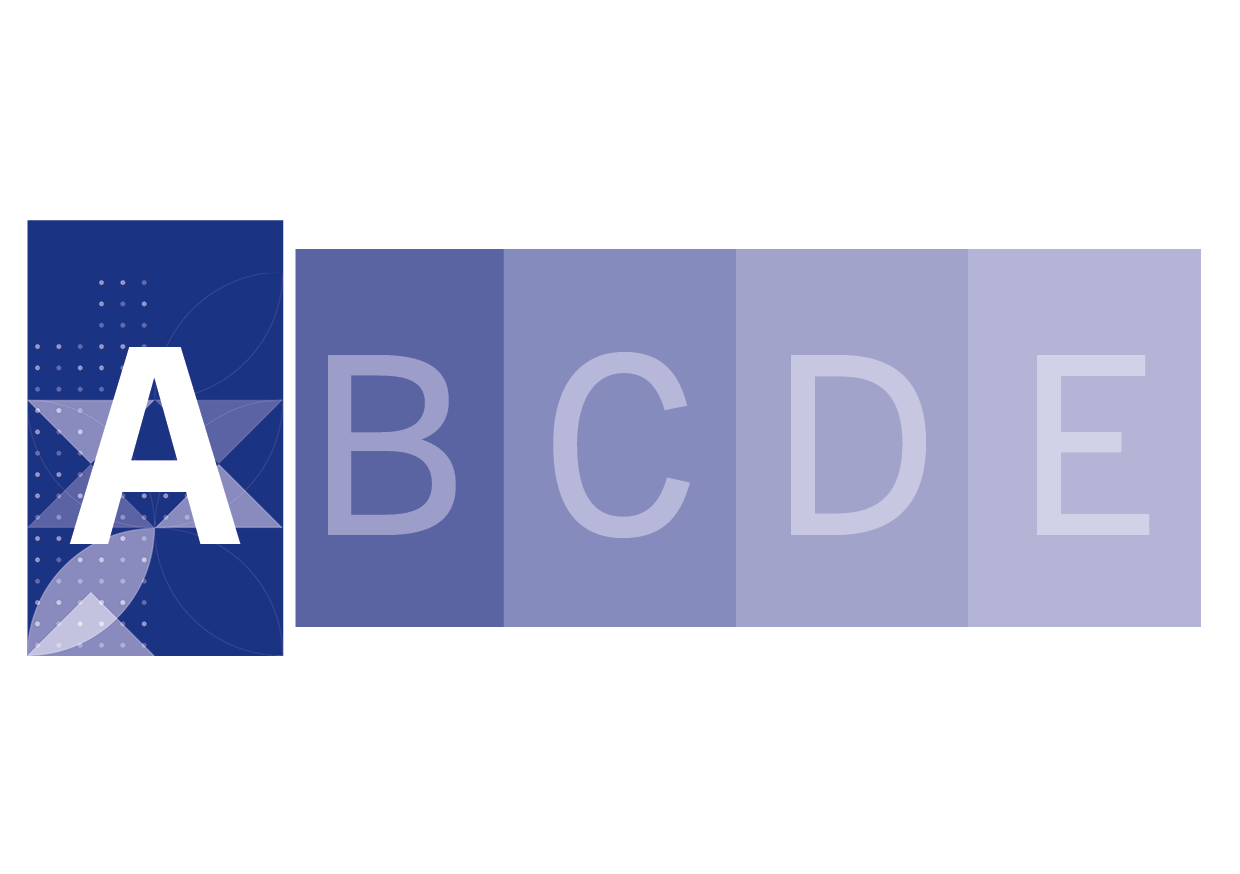
Soil Health score
Proof of improvement at a glance
By regularly evaluating soil health using Soil Health Indicator and assigning a score, you can monitor the effectiveness of your soil management practices and provide evidence of progress of soil improvement.
The A-B-C-D-E score is thus a valuable tool for both making strategic decisions and demonstrating sustainable performance, for example in reports or certifications for the agri-food industry.
Salt indices
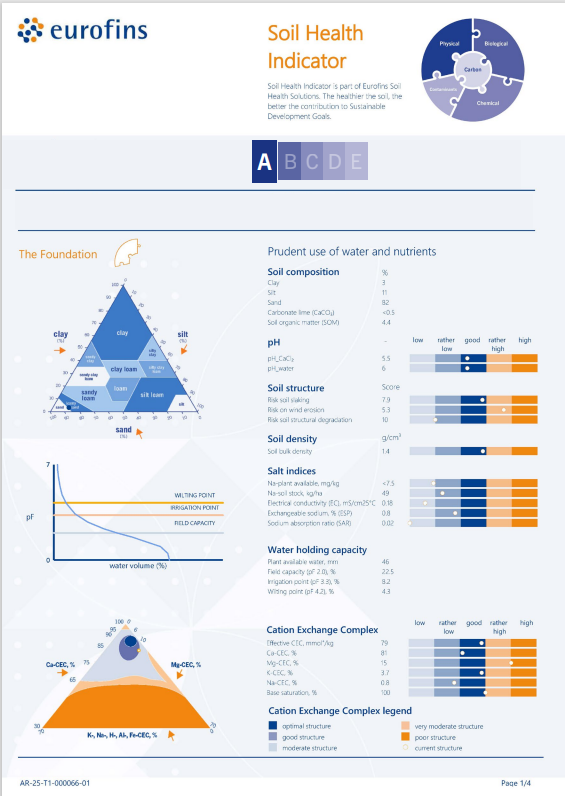
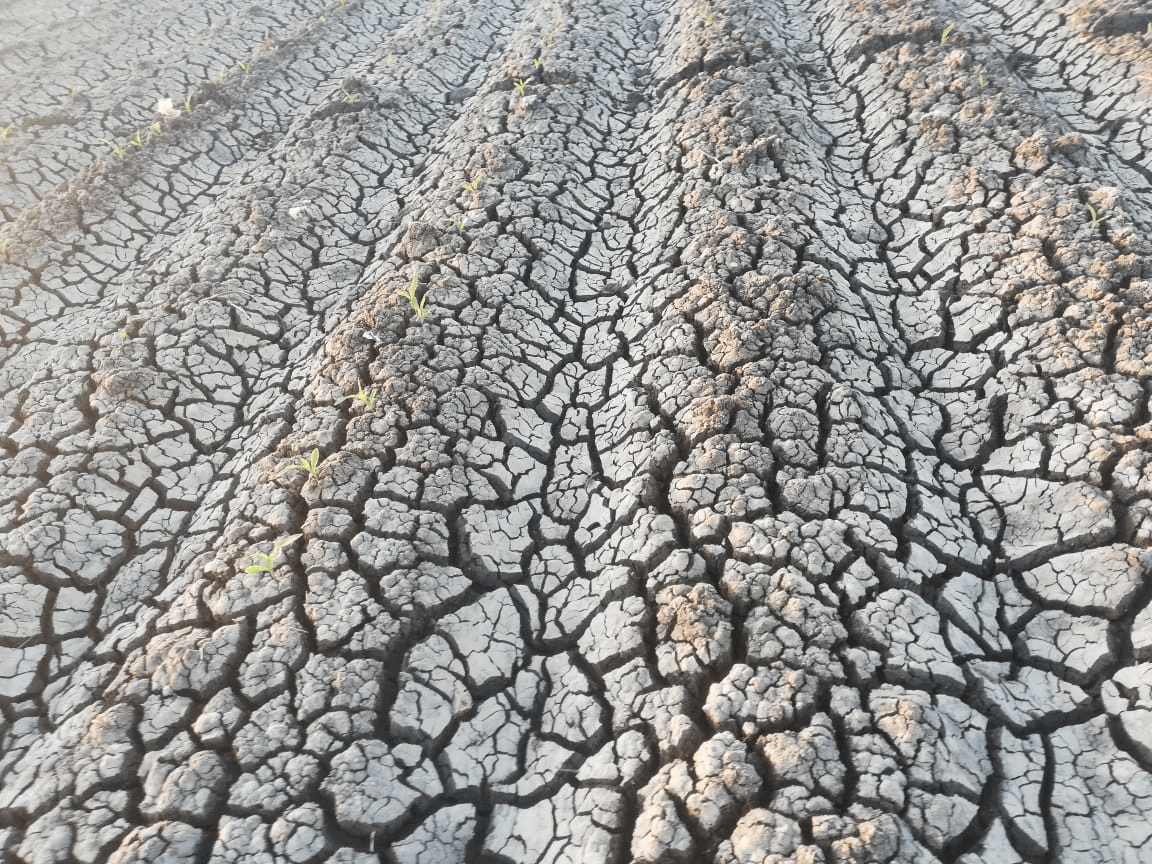
The report provides insight into various sodium indicators (plant-available sodium (Na), Sodium Absorption Ratio (SAR), and the percentage of exchangeable sodium (ESP). In addition to sodium, other salts are also reported, summarised in electrical conductivity (EC). All this data helps in taking measures such as crop selection or applying gypsum to prevent damage.
Cation Exchange Capacity (CEC)
The CEC determines how well soil retains and exchanges nutrients. A high CEC means soil can hold essential nutrients like calcium, magnesium, and potassium, while elements like aluminum and hydrogen can negatively affect soil fertility.
Micronutrients
Essential for plant and microorganism growth. Elements like zinc, copper, iron, and manganese are crucial for photosynthesis, enzyme activity, and nutrient uptake.
Soil life
Diverse soil life is vital for healthy soil. Microorganisms help build or break down organic material, release nutrients, and improve soil structure.
Heavy metals
Contamination by heavy metals like lead, cadmium, and chromium harms soil health. These metals can be toxic to beneficial organisms and disrupt nutrient uptake and pose risks to both animal and human health.
Soil and Crop-based recommendations
Crop-based recommendations
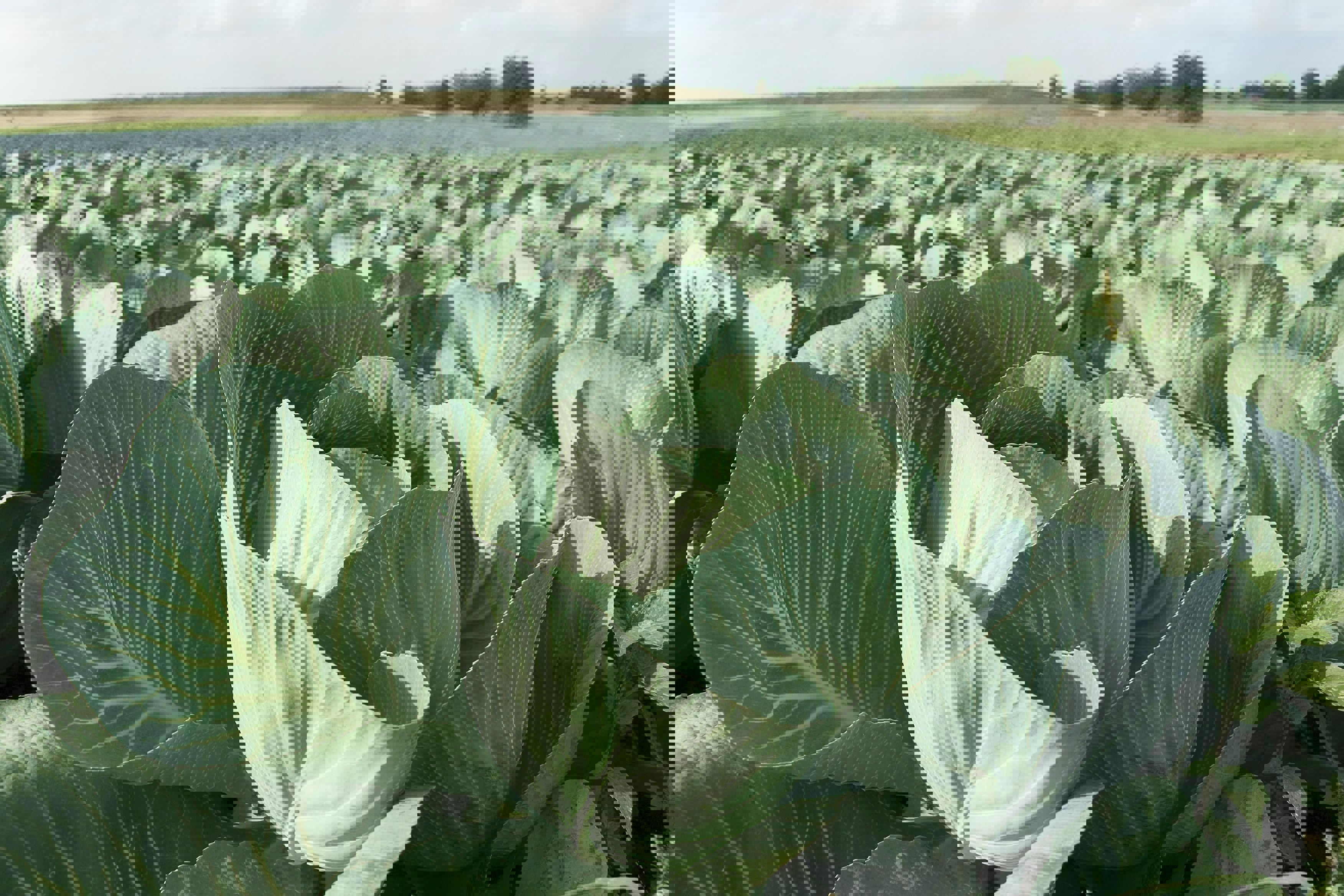
Fertilisation recommendations for up to six crops is generated. Advice is tailored to expected yields and can be adjusted as needed.
Soil-based recommendations
Recommendations to invest in healthy and resilient soil for the future. This includes improving pH, optimising soil fertility, balancing the nutrients bound to the CEC to improve soil structure, and guidelines to maintain or improve the soil’s organic matter status.

Parameters analysed in Soil Health Indicator
Soil Health Indicator combines key chemical, physical and biological measurements to evaluate the soil condition clearly and practicaly. These parameters provide insight into nutrient balance, soil structure, microbial activity and potential risks, forming the basis for soil and crop-based recommendations.
We provide three packages:
- Basic
- Standard (formerly known as Fertilisation Manager)
- Complete

Download and read more!