
Soil Carbon Check

Frequently Asked Questions

Organic matter has several important functions in the soil. It is one of the most important indicators of soil health. Organic matter contributes to nutrient delivery, moisture and air management and soil structure.
Food
Because no light penetrates into the soil, soil organisms cannot use sunlight for photosynthesis as an energy source and are therefor dependent on organic matter for their energy and food supply.
Contribution
Organic matter contributes to nutrient delivery, moisture and air management and soil structure.
How does the soil store CO2?

CO2 is captured in the soil organic material as carbon.
Micro-organisms
Micro-organisms are also a major source of soil organic material.
Plants
Plants capture CO2 from the air through photosynthesis into organic matter; therefore, leaves, wood and roots form an endless storage vessel for CO2.
Carbon cycle
Soil life (fungi, bacteria, small insects etc.) also breaks down organic material. This causes CO2 to be released again. This is known as the carbon cycle.

What is the relation between soil organic matter and soil organic carbon?
What soil organic matter is?
Soil organic matter includes all material in the soil derived from microorganisms, plants and animals, mainly made up of carbon, oxygen and hydrogen.
Other elements in organic matter
It also contains organic compounds such as proteins and amino acids, which include nitrogen, phosphorus and sulphur.
Proportion of organic carbon
As a guideline, soil organic carbon makes up about 50% of soil organic matter, though this can range between 30% and 70%.
Why this varies?
The actual carbon content depends on factors like the origin of the organic matter and the soil type.
How much CO₂ can the soil capture?
How CO₂ is stored in the soil
CO₂ is captured in the soil organic material as carbon. Plants capture CO₂ from the air through photosynthesis into organic matter, so leaves, wood and roots form an endless storage vessel for CO₂.
The role of microorganisms
Micro-organisms are a major source of soil organic material, but soil life (fungi, bacteria, insects etc.) also breaks down organic material.This releases CO₂ again, what is known as the carbon cycle.
Factors influencing CO₂ capture
CO2 capture in organic matter therefore depends on the type of organic matter: stable organic matter contains more carbon than fresh organic matter.
The activity of the soil life is important for the degree of degradation. Carbon Check provides insight into the amount of carbon captured.
Global targets for soil carbon
At COP21 (Paris) a 4 per 1000 increase was anticipated; an annual increase of 0.4%. On average an increase of 2 ton CO2 can be expected (depending on among others weather conditions and management).
How can I increase CO₂ capture in the soil?
There are several ways to improve CO₂ capture in soil. The best method depends on the type of farm and soil conditions.
1. Improve crop rotation
Crops like maize, potatoes and onions take up many nutrients from soil and leave little crop residue. Wheat, barley and grasses form a lot organic matter and contribute to organic matter accumulation.
2. Add organic material
Provide additional organic matter with animal manure or compost. In the circular economy, the use of compost will become increasingly important.
3. Sow green manure or cover crops
Keep a growing crop on the field as much as possible. Different green manure and their contribution to organic matter varies. The choice of green manure depends on the land, soil health and climate.
4. Leave crop residues
Leave crop residues (roots, stubble etc.) on the land as much as possible after cultivation. This contributes to soil health and the build-up of organic matter and prevents erosion.
5. Ensure optimal crop growth
Fertilisation tailored to the crop and soil, plus sufficient water, is essential. Soil and crop analyses provide insight to optimise fertilisation and ensure the crop receives the right nutrients.

How does organic matter contribute to soil health?
Organic matter retains moisture. Plots with higher organic matter content are therefore less susceptible to drought and can more effectively ‘capture’ water from rainfall. It is food for soil organisms, therefore not only important for mineralisation, but also for the resilience of the soil. Finally, organic matter improves the workability of the soil.
Soil Health
Organic matter affects biological, chemical and physical soil fertility.
Nitrogen (N), sulphur (S)
Organic matter provides nitrogen (N), sulphur (S) and other nutrients to crops by being released during the decomposition of organic matter.
Potassium (K), magnesium (Mg) and calcium (Ca)
Potassium, magnesium, and calcium loosely bind to negatively charged organic molecules, enabling them to hold positive ions like ammonium or potassium via CEC.
Mineralisation
Mineralisation is the process by which organic compounds in or on the soil are converted into inorganic (mineral) compounds, this process is done by microorganisms.

What is a soil organic matter balance?
Organic matter
Most organic matter is stable, however, organic matter can disappear through decomposition by soil life and it is re-supplemented by the input of manure, compost and crop residues for example.
Balance
The difference between supply and degradation determines whether the content is in balance.
The organic matter content
If the decomposition is higher than the supply, the organic matter content decreases and vice versa.

What is effective organic matter?
Effective organic matter is the part of the organic matter that remains in the soil one year after application of crop residues, manure or compost.
First year
In the first year after application a large part of the organic matter disappears because it is easily degradable.
Contribution
The contribution of this fraction to the content in the soil is quite small. The contribution of the more stable fraction is greater.
Effectively increasing the organic matter
Effectively increasing the organic matter content with a green manure crop works best with a crop with a low decomposition rate and a high carbon/nitrogen ratio (C/N ratio).
Positive effects
The content of effective organic matter (EOM) determines how long the positive effects on water retention capacity and soil structure will be noticeable.
Choice of green manure and EOM
Green manure breakdown and EOM contribution are shown by the humification coefficient (HC). At HC 0.7, 70% decomposes in a year, leaving 30% as stable organic matter.
Dynamic organic matter increases chemical soil fertility and is food for bacteria; stable organic matter increases physical soil fertility and is food for soil fungi. Both contribute to soilfertility.

Why should you perform Soil Carbon Check annually?
Organig Matter build up
The build-up of organic matter in soil takes time and requires the continuous attention of the farmer/grower. Soil management and mineralisation by soil life have a great effect on carbon capture.
Other conditions
Climatic conditions, temperature and precipitation are also very influential.
Monitoring
Annual monitoring provides insight into the actual state of the soil; measuring and re-measuring the soil carbon status should lead to a significant increase in CO2 storage
Check yearly
When a Soil Carbon Check is performed yearly, improvement can be proved much sooner. Moreover, chain partners in the agri-food sector require up-to-date figures on the condition of the soil.
Data
Only with up-to-date data is it possible to claim and prove sustainable land use.

What is the recommended sampling intensity?
The intensity of soil sampling needed to find a significant increase in SOC ( soil organic carbon) includes, but is not limited to:
>> Area (field/plot- or farm- or district/region/group-level).
>> Land use (arable or grassland).
>> Current soil organic carbon content.
>> Anticipated increase.
>> Single or double soil sampling.
Example
To establish an increase in SOC of 0.3% (absolute) on arable land, when the initial SOC was 1%, 4 years of sampling (repeated sampling) is needed. Grassland would require 5 years.

What is the best sampling depth for a Soil Carbon Check?
Rhizosphere
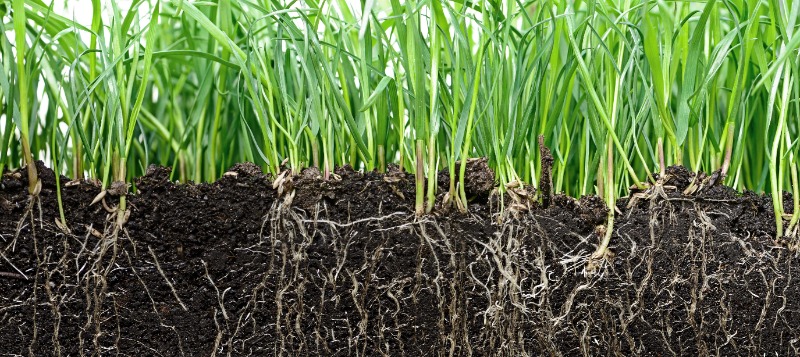
Carbon enters soil through decomposing organic matter from root exudates—substances secreted by plant roots and modified by microbes in the rhizosphere.
Roots
It is therefore best to sample the soil layer in which most roots are located, or the plough layer (as this is mixed with organic matter). We advise a depth of 30 cm, if possible.

Which crops should I sow to improve soil organic matter?
Not all crops contribute equally to effective organic matter.
Effective organic matter
Effective organic matter is the part of the organic matter that remains in the soil one year after application of crop residues, manure or compost.
Green manures.
Green manure crops contribute to the organic matter of the soil. Increasing the organic matter content with a green manure crop works best with a crop with a low decomposition rate and a high C/Nratio

Can a Soil Carbon Check be used on both arable land and grassland?
Grassland
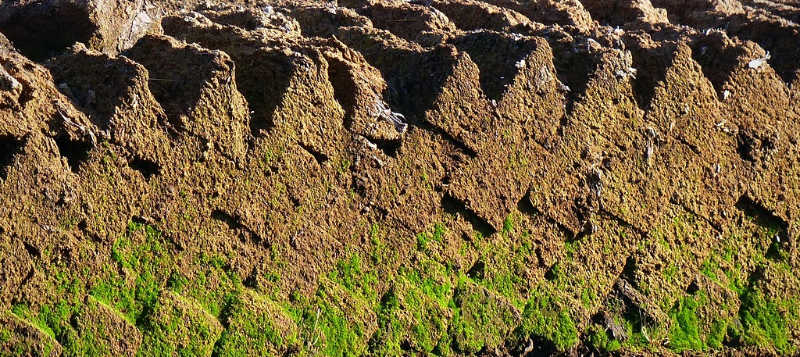
Grasslands are very apt for storing soil organic carbon; permanent grasslands sequester carbon particularly easily.
Arable land
Arable land is also suitable for storing carbon and although in arable farming systems sequestering carbon can be challenging, there is very high potential.
Can you still perform a Soil Carbon Check when organic matter levels are high, like on peat soils?
Yes, this is possible. However, it is hard to see an increase when organic matter is already high.

What is the effect of global warming on soil carbon capture?
As it gets warmer on earth, the breakdown of organic matter in the soil will increase. It is therefore important to keep a finger on the pulse and perform regular Soil Carbon Check.
What is new in Soil Carbon Check?
Soil Carbon Check measures CO₂ stored in soil and tracks capture over time using NIRS-based organic matter analysis, adding depth to Fertilisation Manager’s C-determination.
Carbon Calculator
The report of Soil Carbon Check is supported by the Carbon Calculator. This makes it possible to determine the effect on carbon capture of a crop, green manure crop or animal manure or compost.
Advice
The advice that follows makes possible to optimize the carbon management for the own situation.
How do you calculate how much CO2 is captured in organic matter?
How is CO₂ capture calculated?
To express the climate impact, soil carbon capture is converted to CO₂ using a fixed factor based on molecular weight.
The conversion factor
A factor of 44/12 = 3.67 (molar mass CO₂/molar mass C) is applied. This means 1 ton of soil carbon equals 3.67 tons of CO₂ captured.

What is the Carbon Calculator?
Carbon Calculator
The Carbon Calculator shows how crops, green manure, compost, or animal manure affect carbon capture and gives tailored advice to optimise farm carbon management.
Additional carbon
The Carbon Calculator also shows the amount of additional carbon you have stored, in tonnes per hectare, and therefore how many carbon credits you may be able to claim.
QR-code
Use the link or QR-code on your report to open the Carbon Calculator. With your latest soil carbon data you can optimise your choice of crop or which manure (green/compost) to apply on your fields.

How can I get carbon credits?
Eurofins Agro does not produce carbon credits; we provide reliable tests that can be used by certifying parties.
Other FAQ

Equi Feed
Soil Life Monitor
Soil Carbon Check

Pricing & invoices

Documents
Analysis & reports

Taking a sample